
I’ve watched countless rom-coms and romance anime over the years, and a handful of them have left a real mark on me – especially the pure romance series whose protagonists live with disabilities, whether deafness or muteness. Yet few have hit me as hard or as masterfully as Love Unseen Beneath the Clear Night Sky (known in Japanese as Kakekoi). Among pure romance anime, this one has made me shed more tears than anything I’ve seen in a very long time.
The plot is a familiar one. The main character, Sorano Kakeru – about as ordinary and milquetoast as a protagonist can be – meets a blind girl named Fuyutsuki Koharu. As their bond deepens, Koharu falls in love with him. Then tragedy strikes: she is hospitalized after a relapse of the cancer that originally caused her blindness. Kakeru, ever the caring friend, visits her with their friends Yuuko and Narumi. In a painful attempt to make it easier for them to move on, Koharu pretends she has forgotten them.
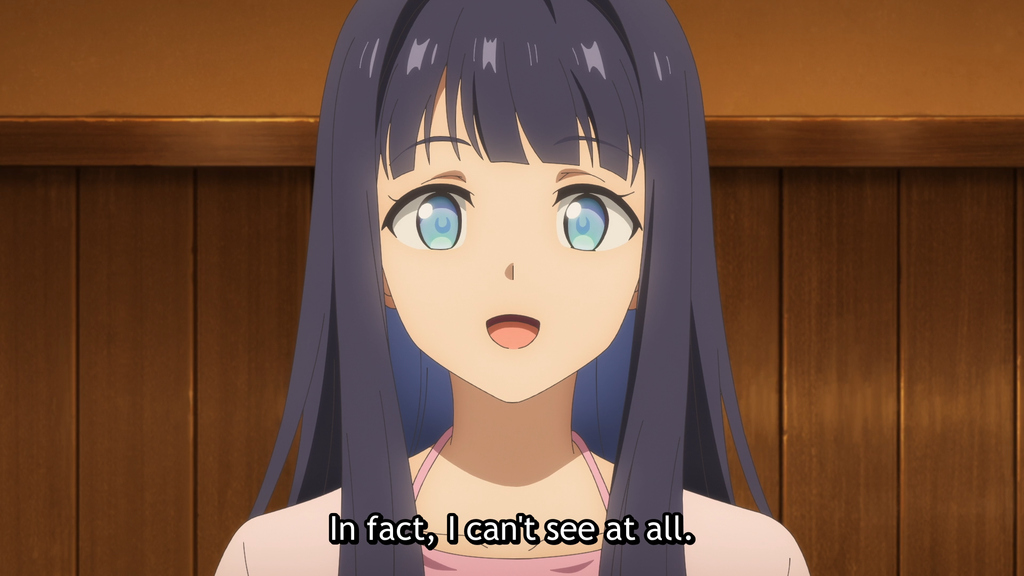
I found that particular decision slightly off-putting and unnecessary. Koharu’s friends – especially Kakeru, are clearly not the type to abandon someone who is sick and dying. What I admire most is how Kakeru keeps visiting her, doing everything he can to lift her spirits through the hardest moments of her illness. Eventually he confesses his love and begs her to keep fighting. The final episode ends on a bittersweet note: Koharu not only achieves every dream she wrote in her notebook, but also the ones she never wrote down – getting married, raising a child, and attending her daughter’s wedding—before finally succumbing to her illness in her mid-forties. Kakeru later develops cancer as well and dies not long after her.
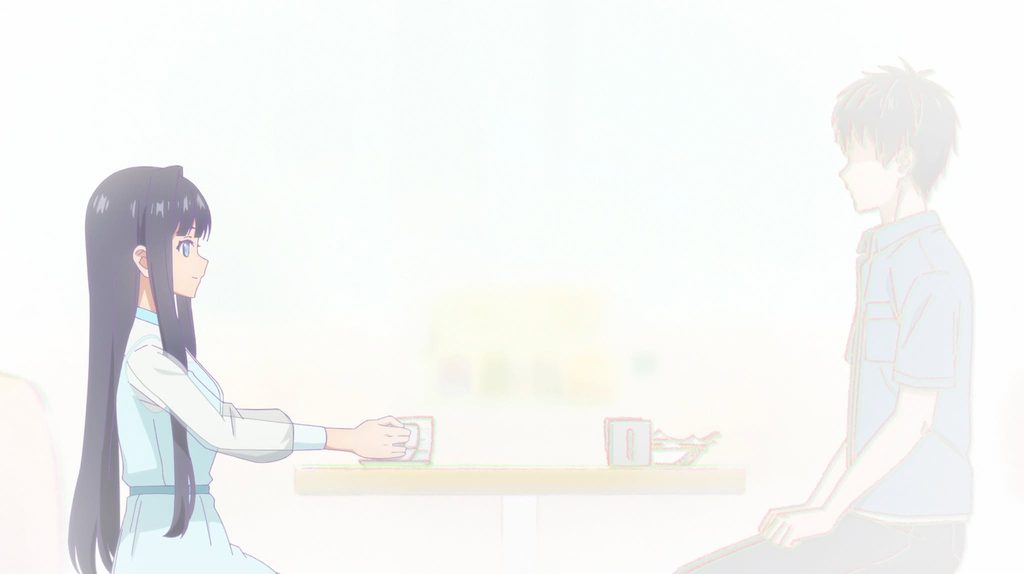
Visually, the series is a mixed bag. The fireworks scenes are stunning in both animation and color, but outside of those moments the animation is generic and average. The same is largely true of the character designs, though Koharu’s is a standout. Her long blue hair gives her an almost angelic quality, and the distinctive blue hue of her eyes sets her apart from everyone else. That color becomes especially beautiful in the hospital scene when the lights are out and her eyes take on soft greenish and purplish hues. I’m also grateful for how thoughtfully the studio portrayed the reality of Koharu’s blindness: in one episode a soft white transparent haze surrounds her, visually representing the world that she cannot see.
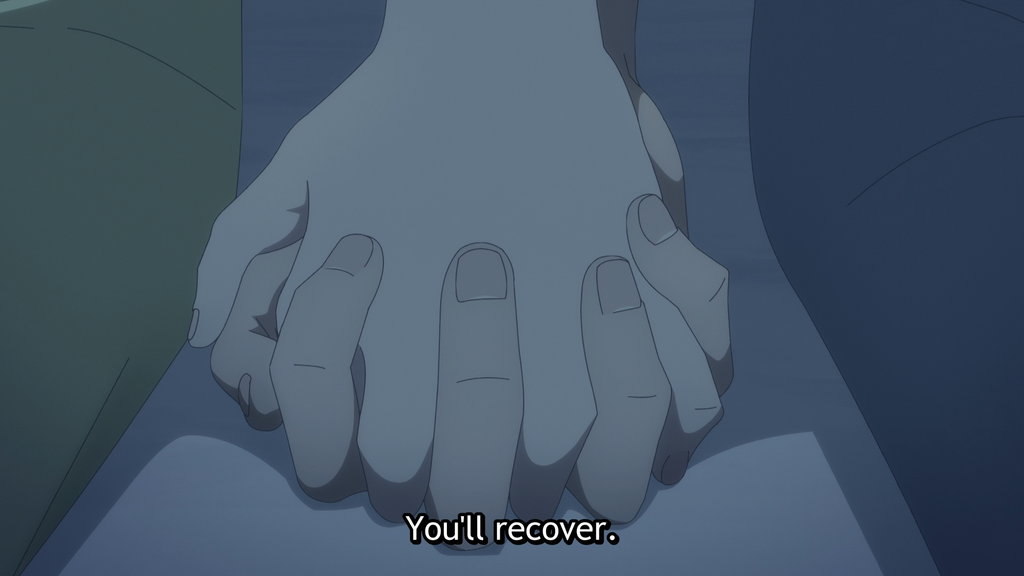
Koharu is the undisputed MVP of the show and the character who completely won my heart. Losing one’s sight to cancer and then living with that disability is anything but easy, yet she never blames anyone. Instead she stays positive, adapts, and manages to live an ordinary everyday life. Still, the reality of being blind and confined to a hospital bed because of cancer complications is crushing. I can relate to that struggle to some degree—I’ve spent time in hospitals myself, taking medication every day and unable to go outside. It’s depressing and exhausting. What I admire most is her determination never to give up. She fights, and she succeeds, largely because of Kakeru, who stays by her side the entire time, refusing to let her abandon the fight and doing everything possible to keep her spirits up.
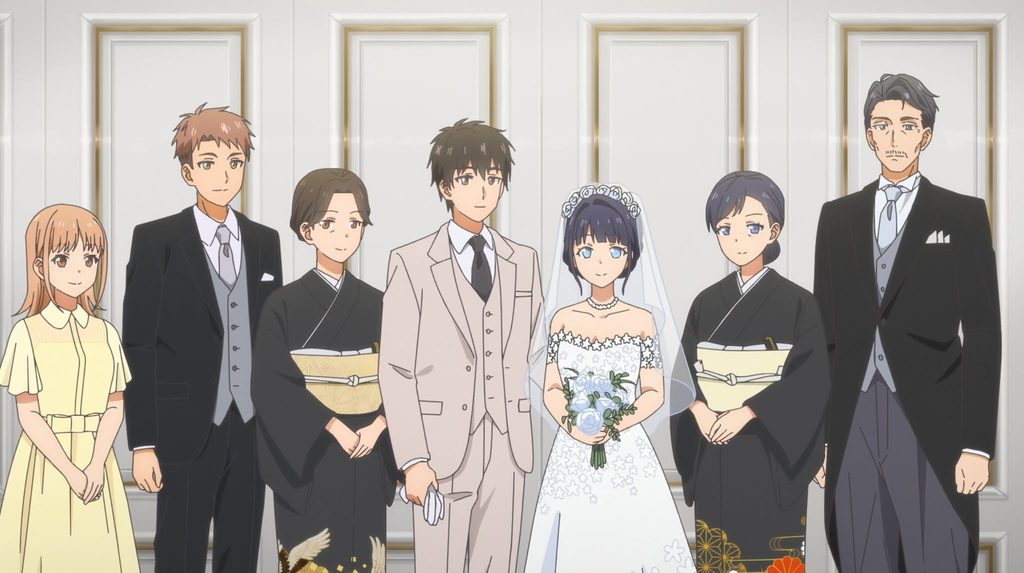
The ending is bittersweet in the best way. After being discharged from the hospital, Koharu marries Kakeru. She fulfills every dream: marriage, motherhood, watching her daughter grow up, and attending her wedding—before she ultimately passes away from breast cancer. Kakeru soon dies shortly after her from colon cancer. Even though the ending is emotional, I prefer it to Your Lie in April because it offers a proper conclusion and a far happier one. If you’re looking for an emotionally charged romance anime that still carries a hopeful, warmer tone, I wholeheartedly recommend Love Unseen Beneath the Clear Night Sky.
Rating: 9.7/10